Services & Perks Redesign — Verizon

Services & Perks Redesign — Verizon

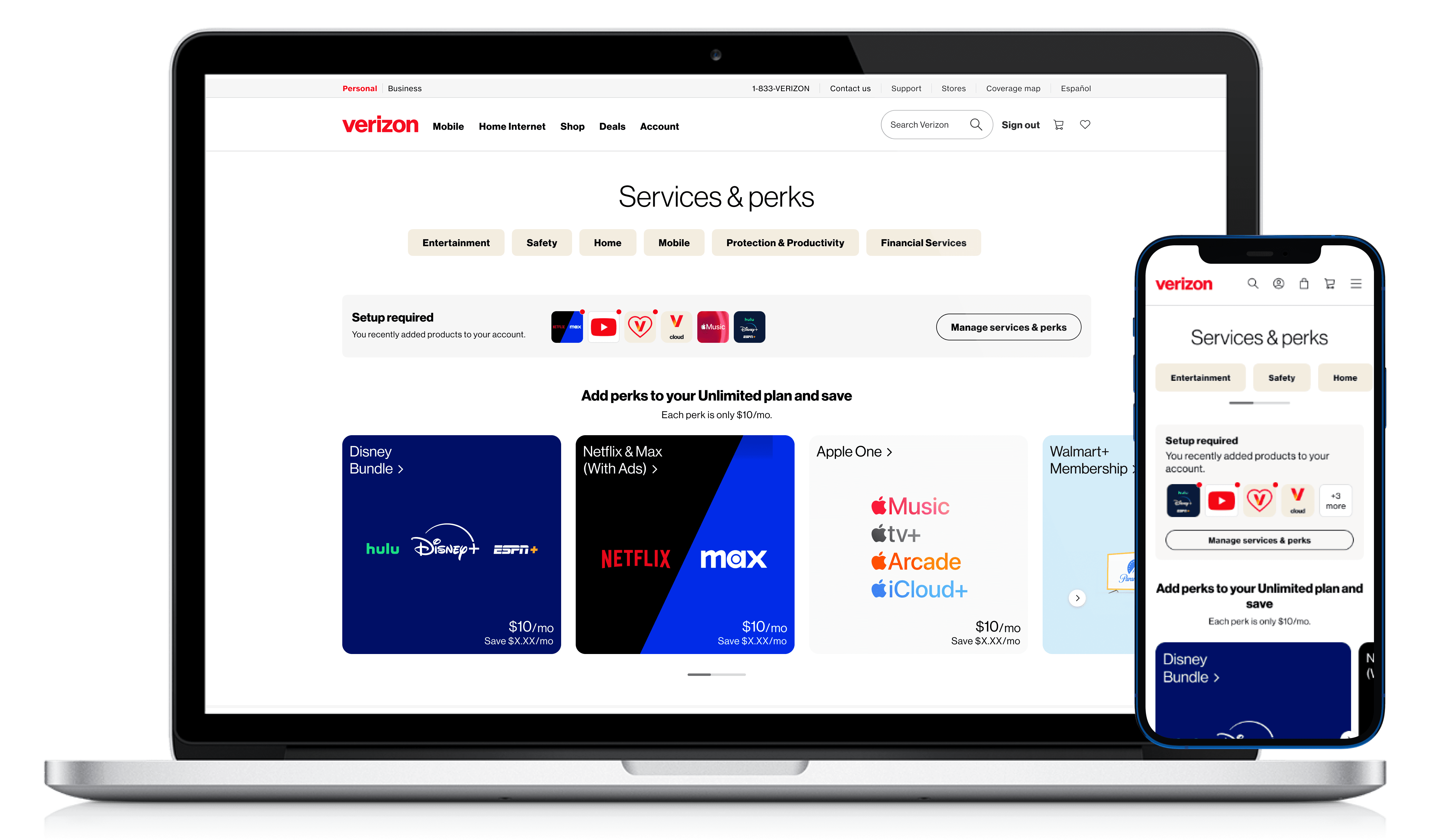
For the best experience, please view this portfolio on desktop

Disjointed journeys, inconsistent layouts, and buried eligibility details made it hard for users to find or trust Verizon’s perks — resulting in low engagement and high abandonment.

Role

Product Designer

Time

6 months

Team

7 people

Industry

Telecom B2C

Quick Summary

⭐️Context

Verizon’s existing digital experience for services, perks and accessories was fragmented and inconsistent. Users had to navigate multiple disjointed pages with varying visual styles and unclear eligibility information. This lack of hierarchy and structure made it difficult for users to find relevant offers, leading to high drop-offs and underutilization of Verizon’s benefits ecosystem.

✅SOLUTION

Phase 1 (Reskin):
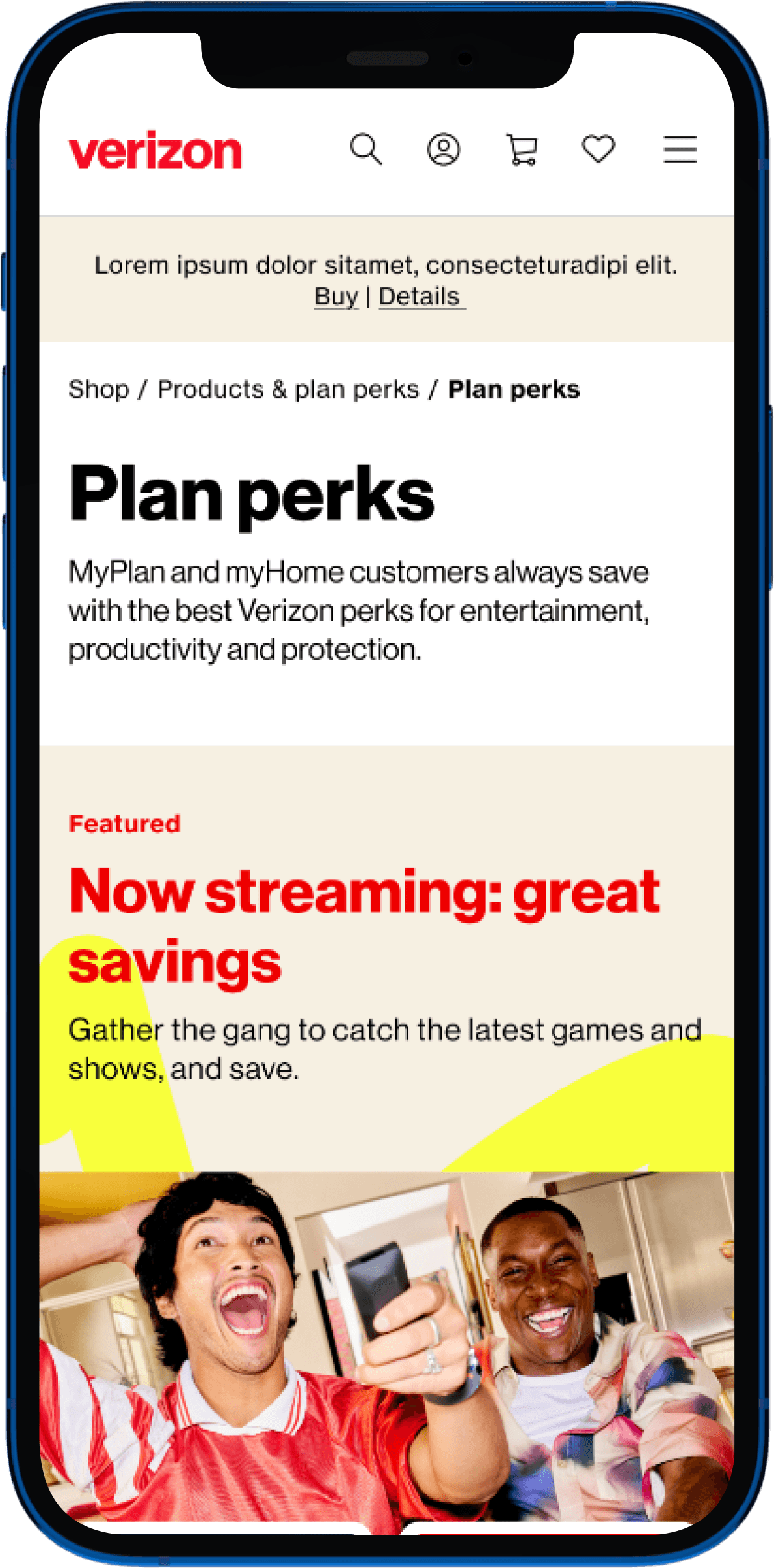
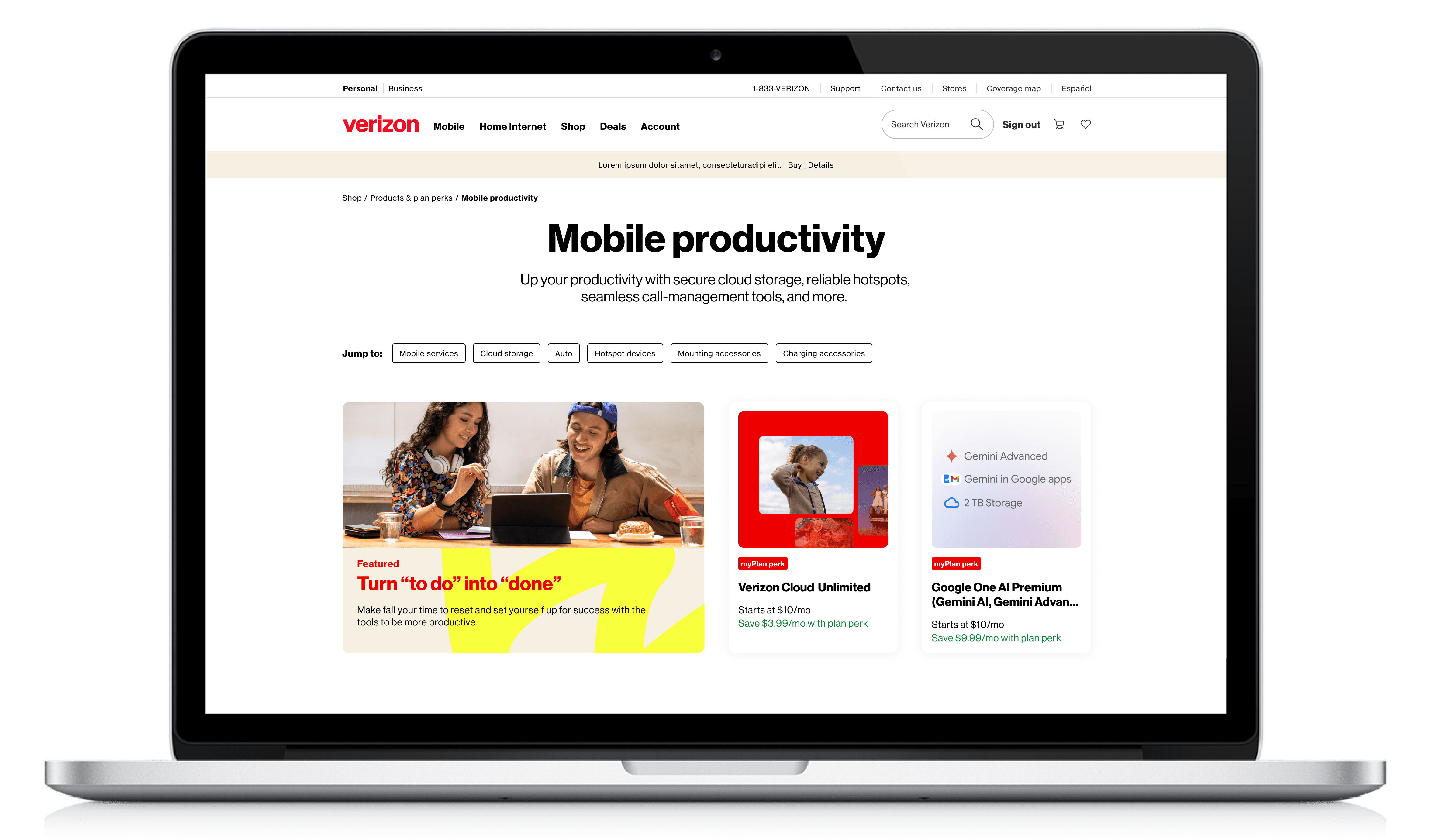
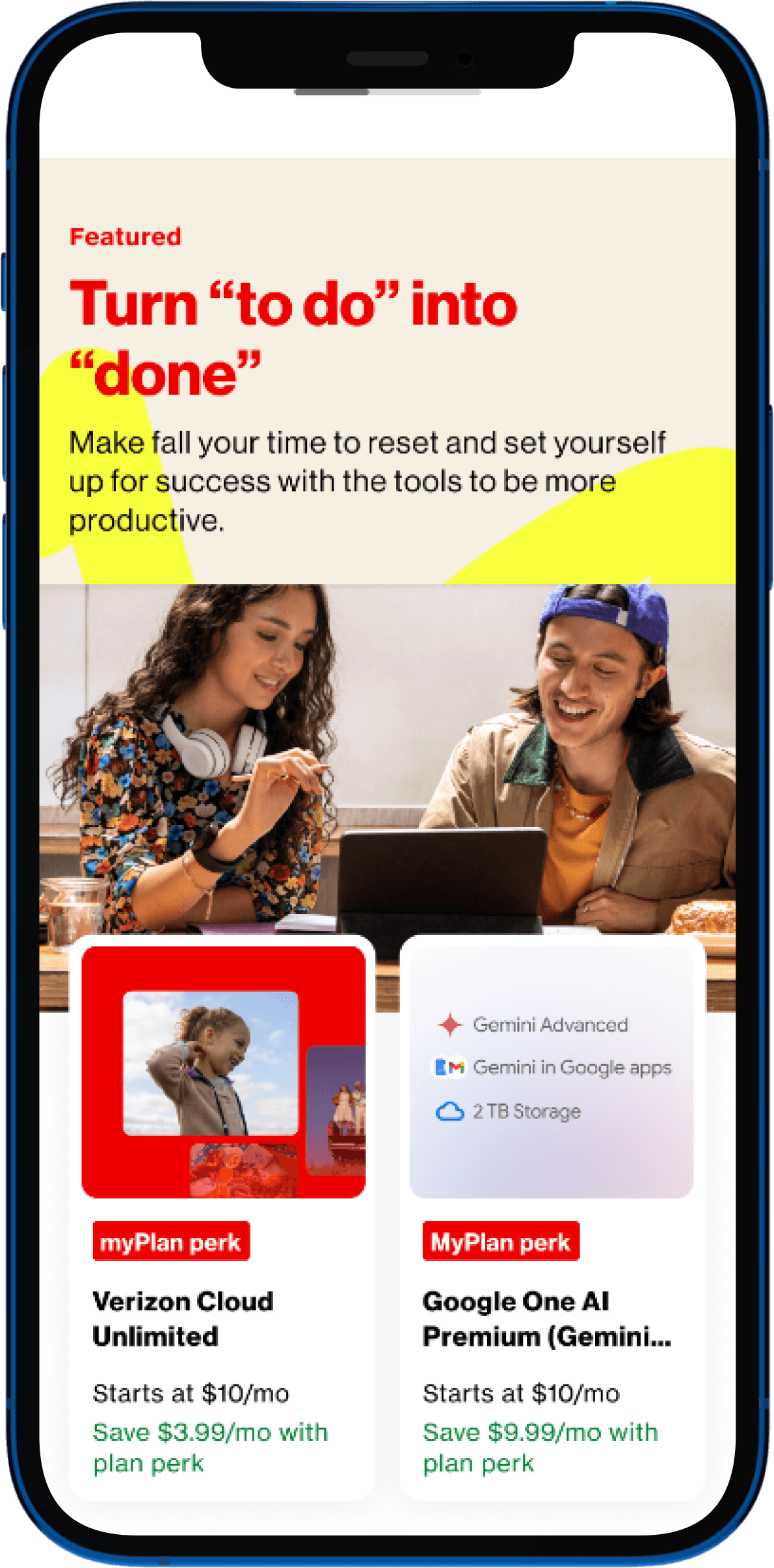
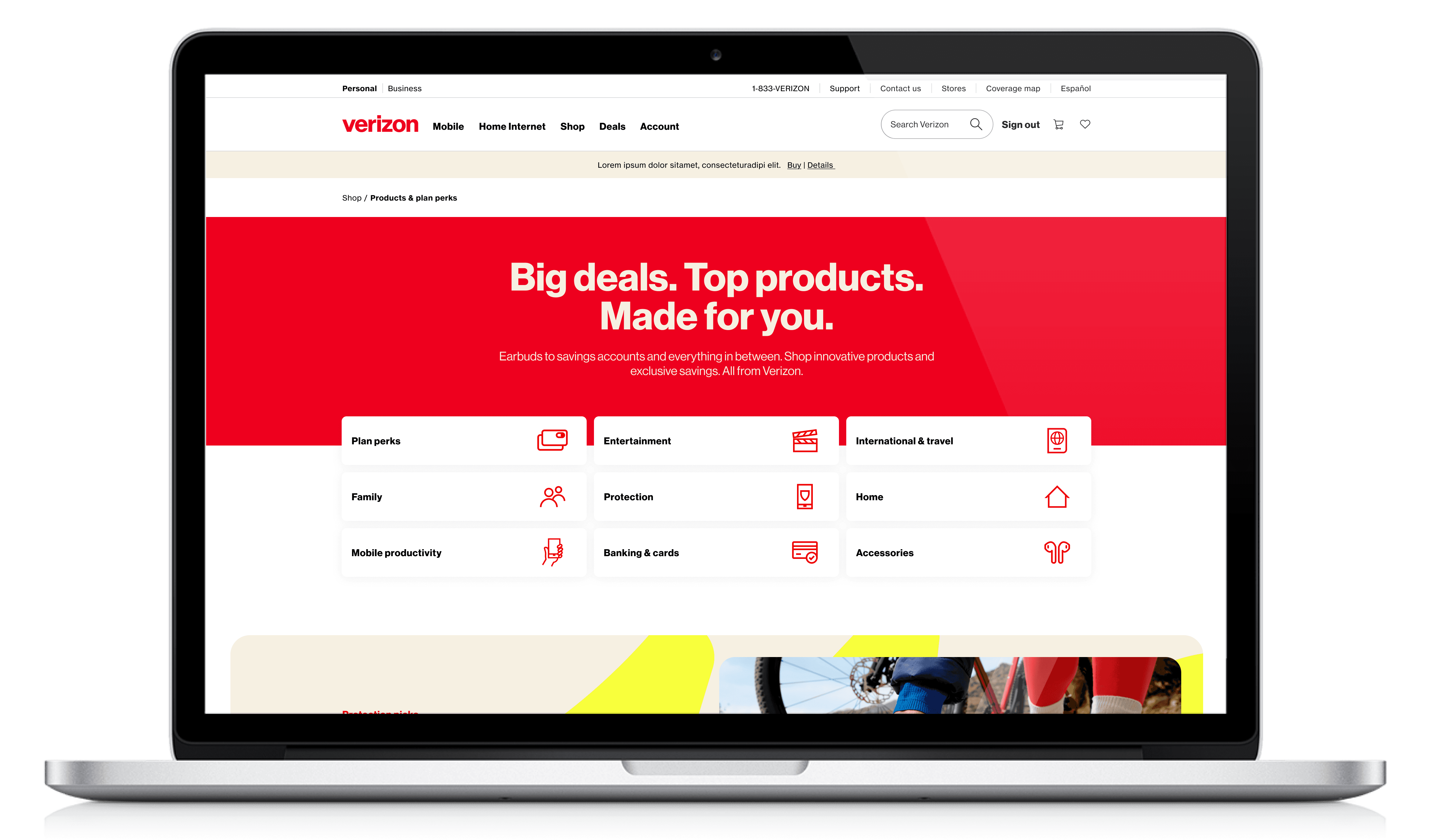
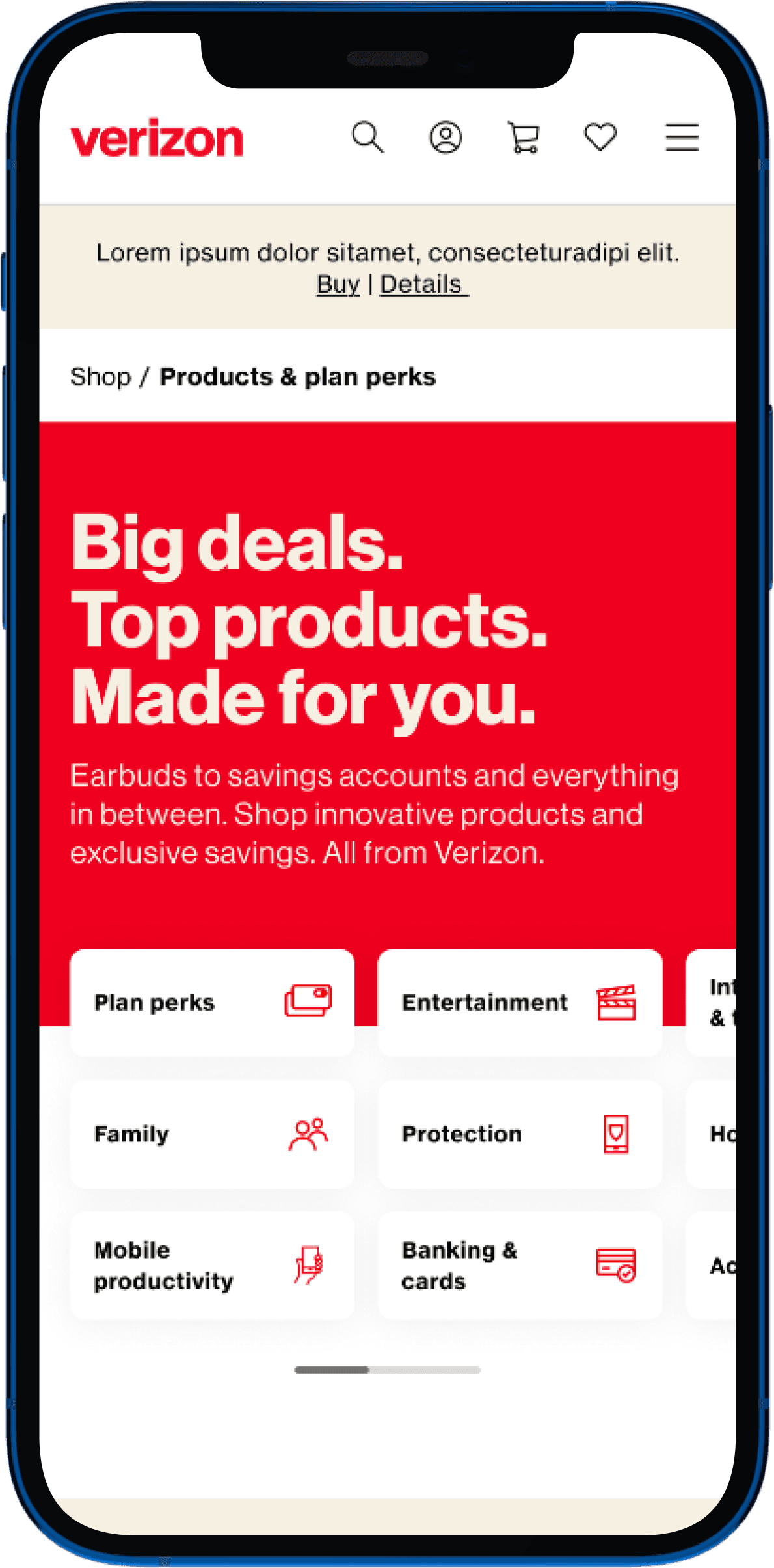
Declutter the UI, adopt a card-based layout, align with Verizon’s design system, improve scanability and engagement.


Phase 2 (Storefront Redefinition):
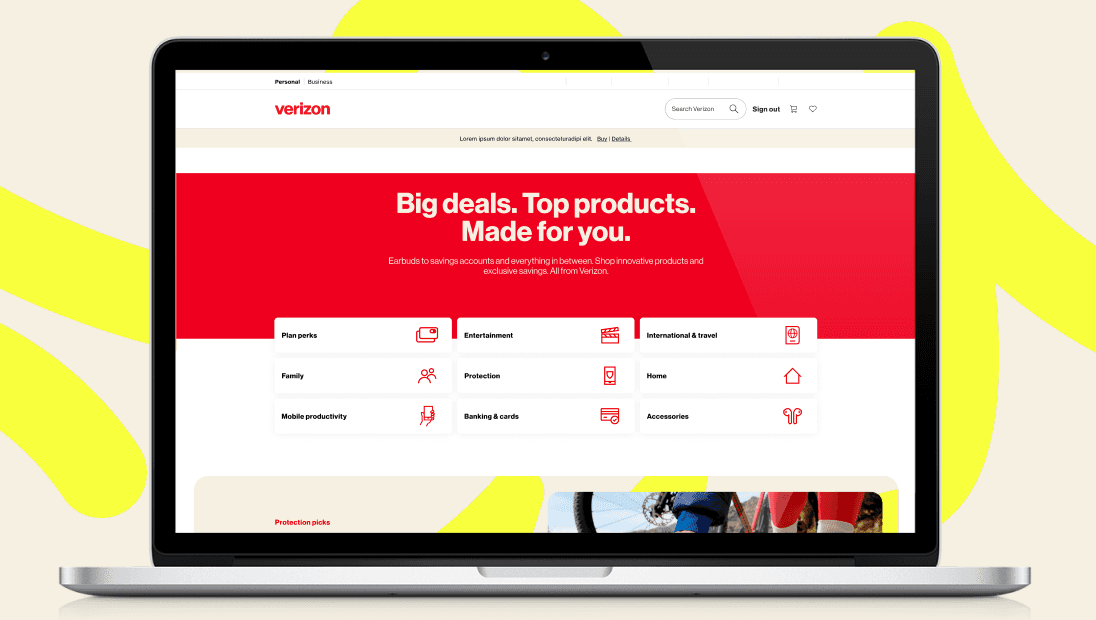
Redefine the information architecture into a single “Offers & Benefits Hub”, unify services, perks, accessories under one roof, add smart filters, eligibility badges and personalization layers.

🎯RESULT

Phase 1 achieved a 32% reduction in drop-offs, 21% increase in featured-perk conversions and 18% increase in session time.


Phase 2 delivered a 42% increase in overall offer engagement, 36% increase in cross-category exploration, 40% faster time-to-discover perks and a 29% lift in redemption and click-through rates.
Context

Verizon offers a wide range of services, perks, and accessories. But the way customers accessed them was fragmented—different offerings lived on different pages, creating confusion and friction.


Our mission was to unify the experience into a single, discoverable storefront that helps users easily explore and engage with everything Verizon offers.

The Problem

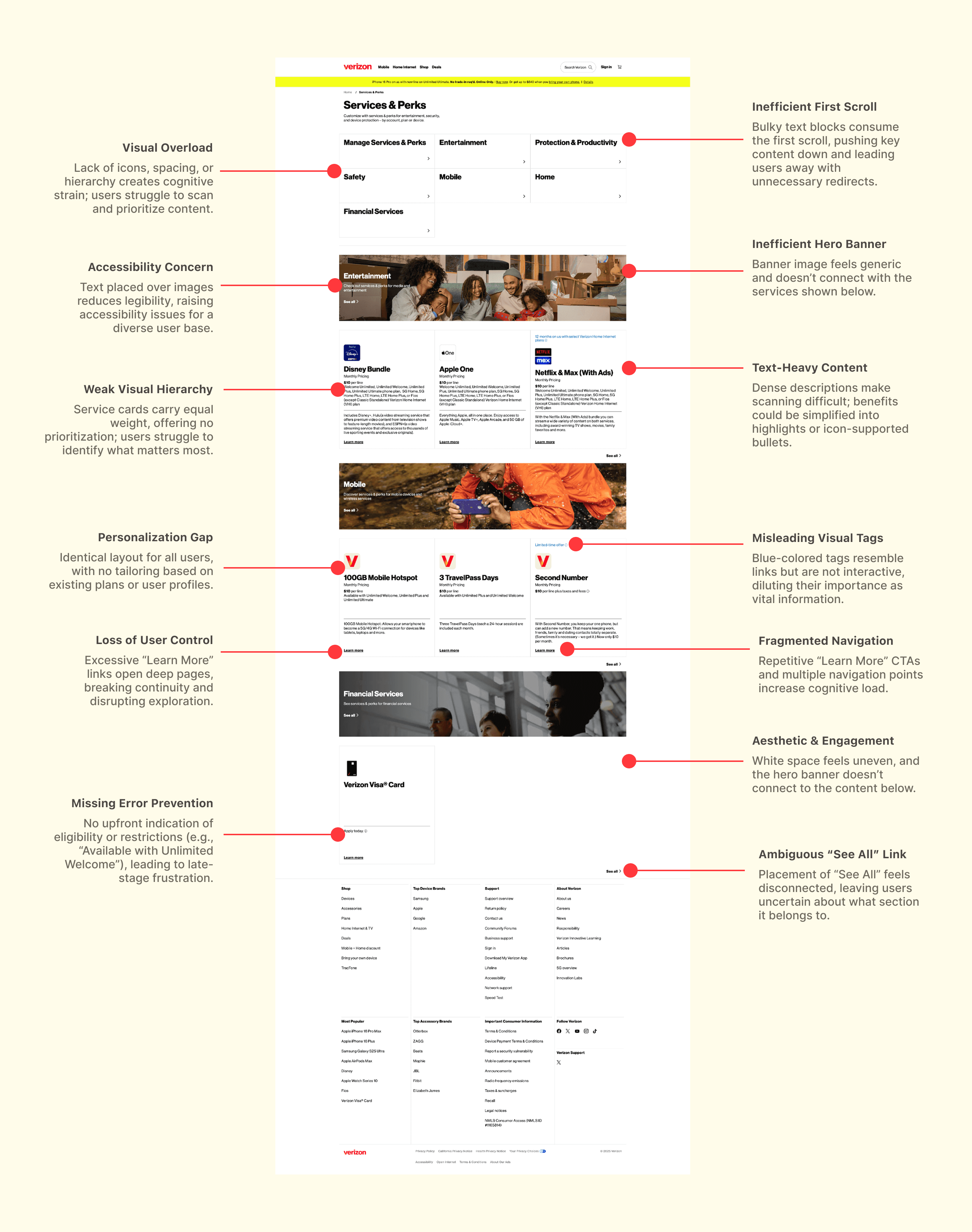
Verizon offered a wide range of services, perks, and add-ons to enrich user plans. However, the existing interface had grown increasingly cluttered and overwhelming.

High Drop-Off Rates

The lack of clarity and heavy navigation friction caused significant user drop-offs within the first scrolls.

Cluttered Interface

Overloaded screens with too much text and no visual hierarchy made it hard for users to scan quickly.

Hidden Perks & Eligibility Confusion

Users only discovered restrictions (like plan-specific perks) late in the journey, causing frustration and drop-offs.

Poor Information Hierarchy

Key benefits and perks were buried under dense copy, forcing users to dig for essential details.

Inconsistent UI Patterns

Repeated “Learn More” links opened deep pages, breaking continuity and overwhelming users.

The result? High drop-offs, low exploration, and missed opportunities for conversion. Verizon had valuable offerings, but users were not discovering or engaging with them effectively

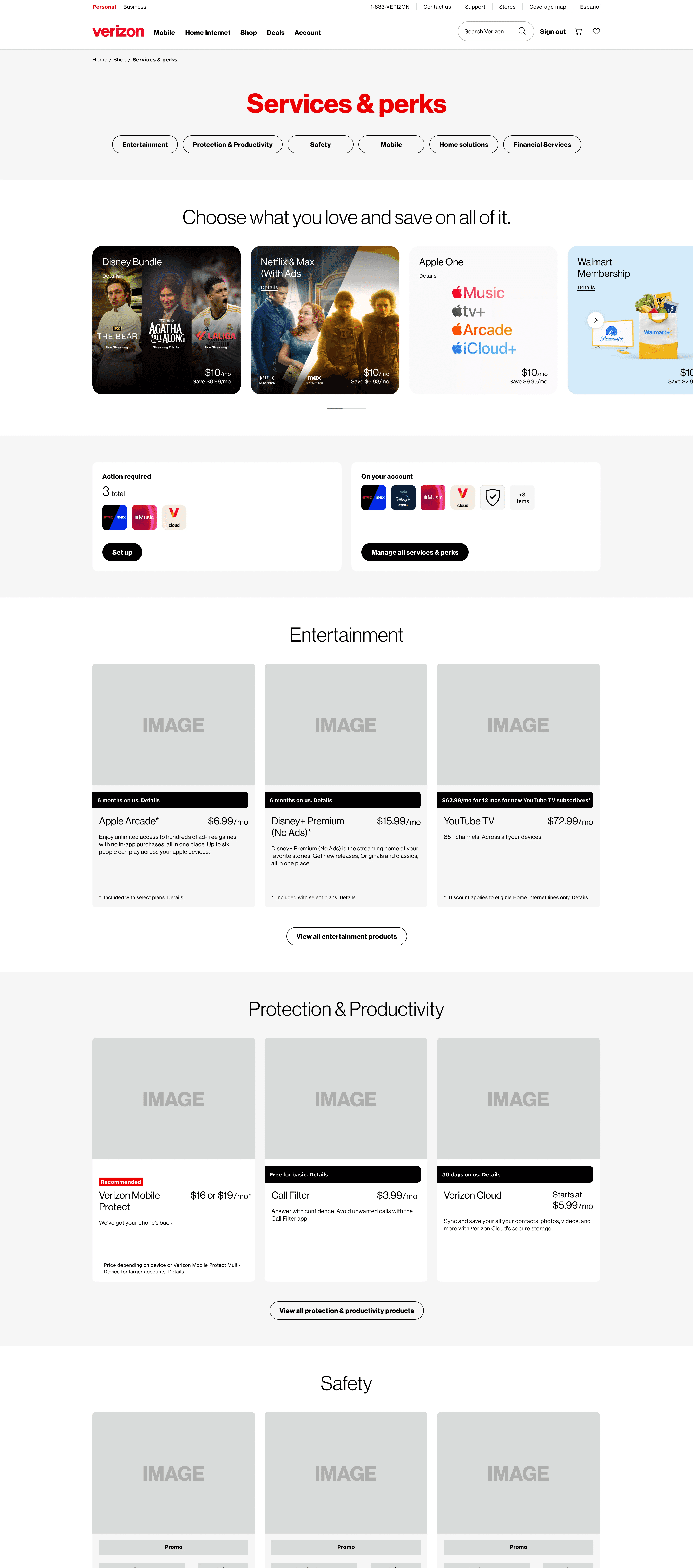
Heuristic Evaluation of Current Services & Perks Overview Screen

Verizon offered a wide range of services, perks, and add-ons to enrich user plans. However, the existing interface had grown increasingly cluttered and overwhelming.

The result? High drop-offs, low exploration, and missed opportunities for conversion. Verizon had valuable offerings, but users were not discovering or engaging with them effectively

Secondary Research

We analyzed internal reports and previous user feedback. The data suggested:

65% of Verizon users primarily accessed offers through mobile.

Multiple “Learn More” clicks led users into deep pages, increasing drop-offs.

Users spent an average of 40+ seconds scanning through the first fold, struggling to locate relevant perks.

Eligibility details (e.g., “Available with Unlimited Welcome”) were discovered too late, causing user frustration.

Primary Research

To validate these findings, we conducted exploratory usability sessions. The research revealed:

👥

7 Participants

🗓️

2 Weeks

🌎

Across US regions

🎯

Focused on Offer Discovery & Redemption

Key Observations:

Users felt overwhelmed by text-heavy layouts.

Perks lacked visibility — most participants missed out on additional offers hidden under secondary pages.

Confusion arose due to technical jargon (e.g., “Number Share – Mobile”), which didn’t match real-world terminology.

Our Approach: A Phased Redesign

Given the scale of the platform, we adopted a two-phase strategy:

1

Reskin: A visual refresh to reduce clutter and test user response.

2

Storefront Redefinition: A complete structural overhaul, integrating services, perks, and add-ons into a unified experience.

This phased approach allowed us to deliver quick wins early on, gather real user feedback, and then scale the redesign with confidence.

Phase 1 - Reskin

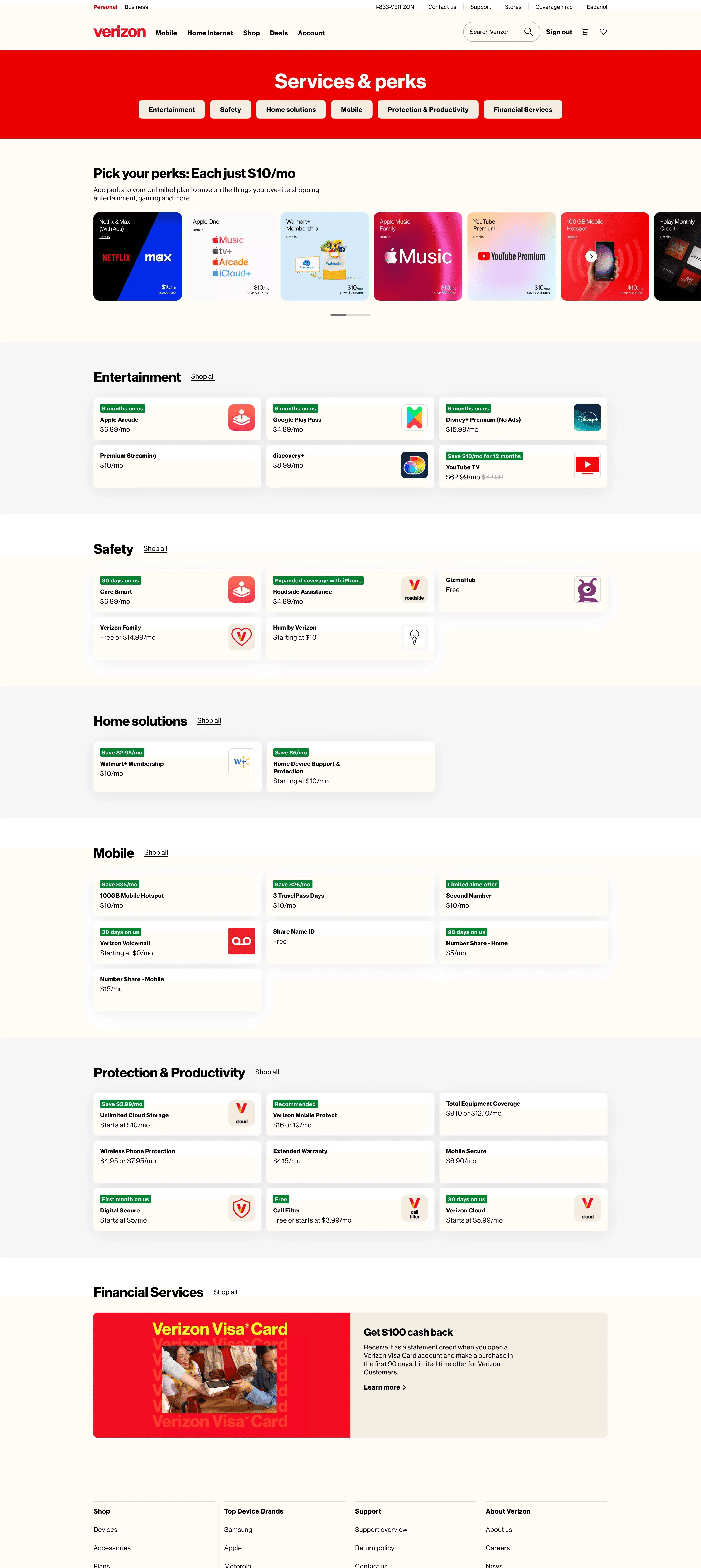
Explorations

Our first step was to declutter the interface without disrupting the underlying system.
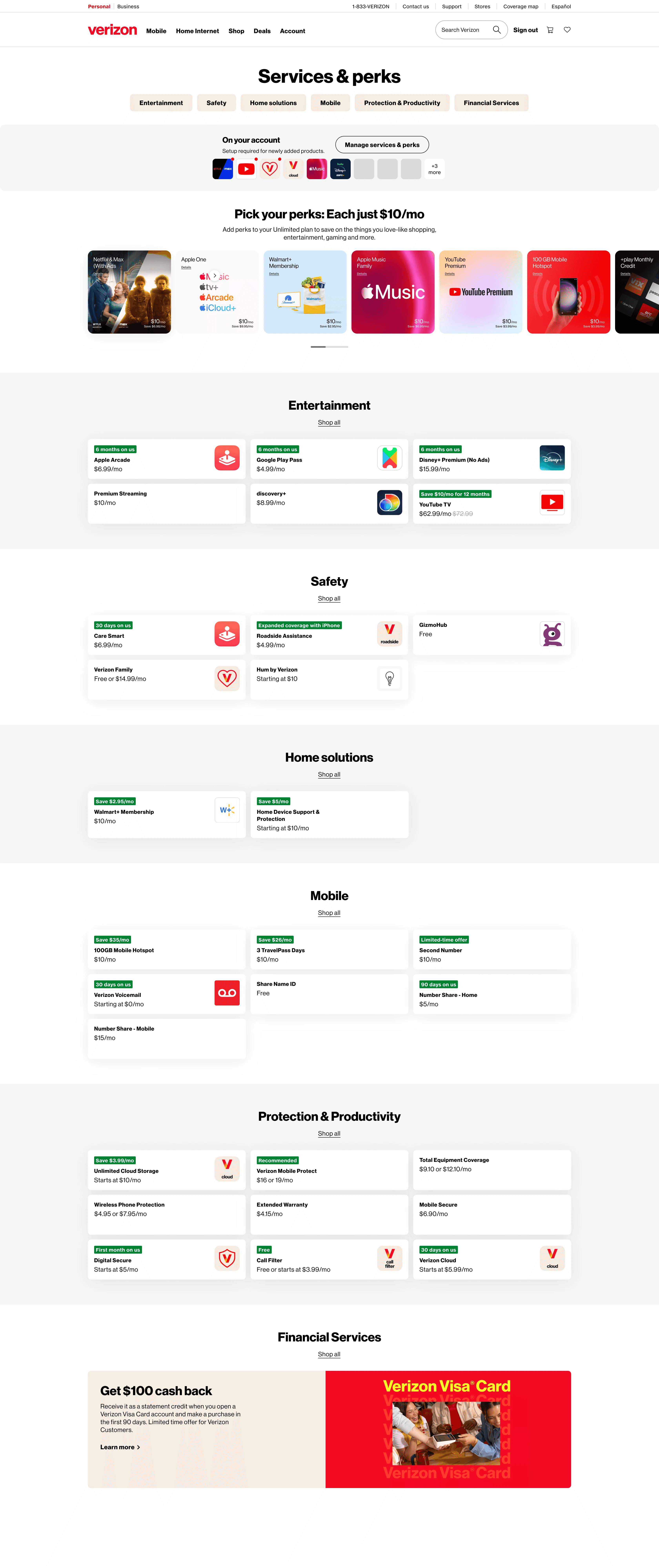
Reskin (Visual Clarity)

Our first step was to declutter the interface without disrupting the underlying system.

Impact

After the Phase 1 reskin launch, we saw tangible improvement in both engagement and perception. While the core experience remained the same, visual clarity and brand consistency made a measurable difference.

What Improved

1

Enhanced clarity and scannability

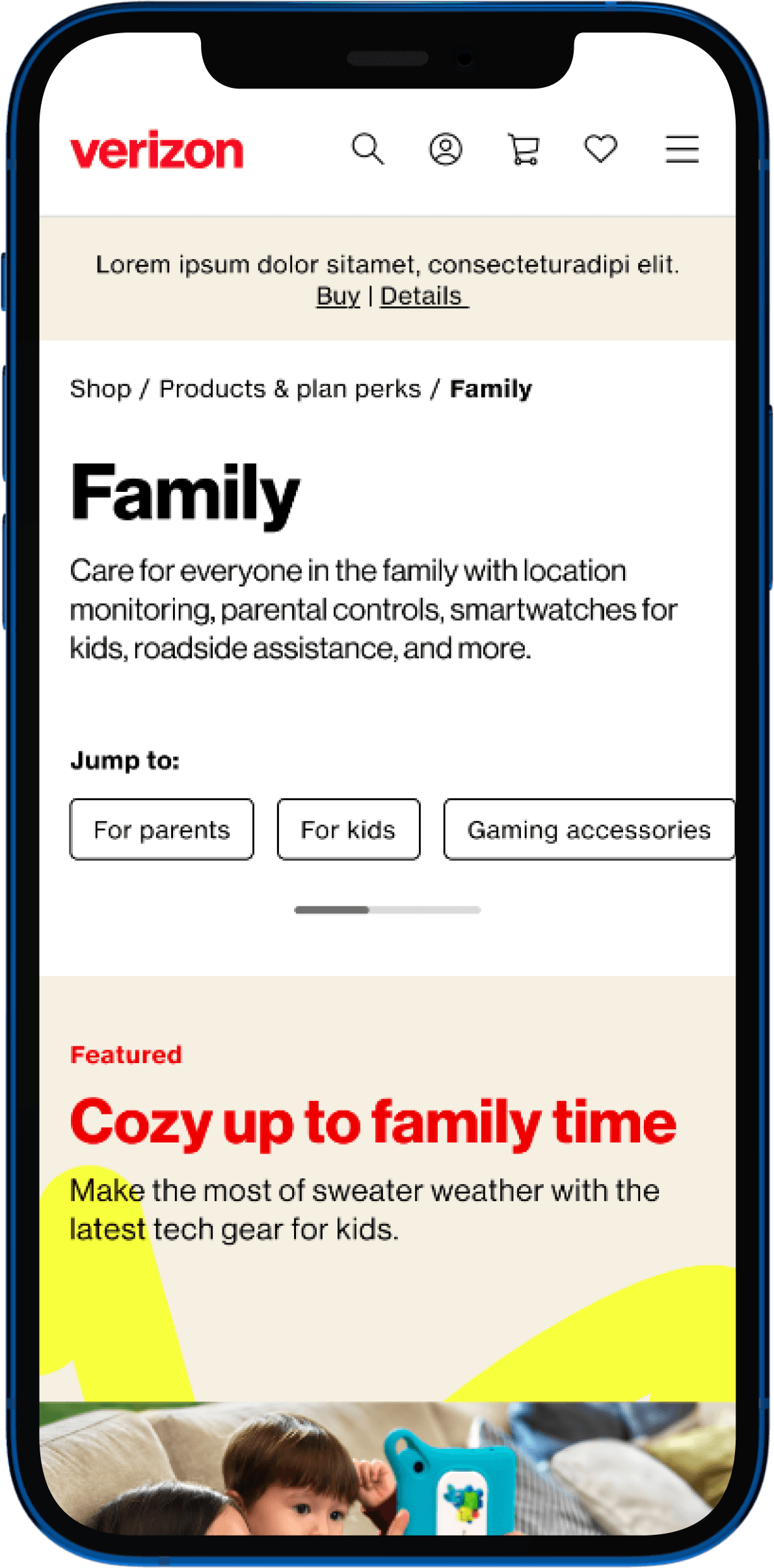
The new card-based layout helped users easily understand what was available at a glance.

2

Consistent brand alignment

The refreshed UI followed Verizon’s design system, creating a sense of reliability and cohesion.

3

Improved engagement

Users explored more perks and stayed longer on the page.

Quantitative Impact

32%

reduction in drop-offs across Services & Perks

21%

increase in conversions on featured perks

18%

longer on-page session time

+25

NPS uplift from internal satisfaction surveys

What we learned after Phase 1 - Reskin

The success of Phase 1 built confidence but also revealed deeper experiential gaps that visuals alone couldn’t solve.
We synthesized learnings from analytics, user feedback, and CMI testing.

Key Learnings

Discoverability remained an issue

Users still had to dig multiple levels to find perks or accessories.

Lack of a unified experience

Different offerings (services, perks, vouchers, accessories) felt fragmented.

Personalization was missing

Users wanted content relevant to their plans and usage.

Inconsistent journeys across pods

Each category (perks, services, accessories) had a slightly different design logic and flow.

These insights shaped our Phase 2 strategy — moving from a cosmetic update to an experience redesign.

Phase 2 - Storefront Redefinition (Experience Overhaul)

Moving Into Phase 2 — The Experience Redesign

Our Goal

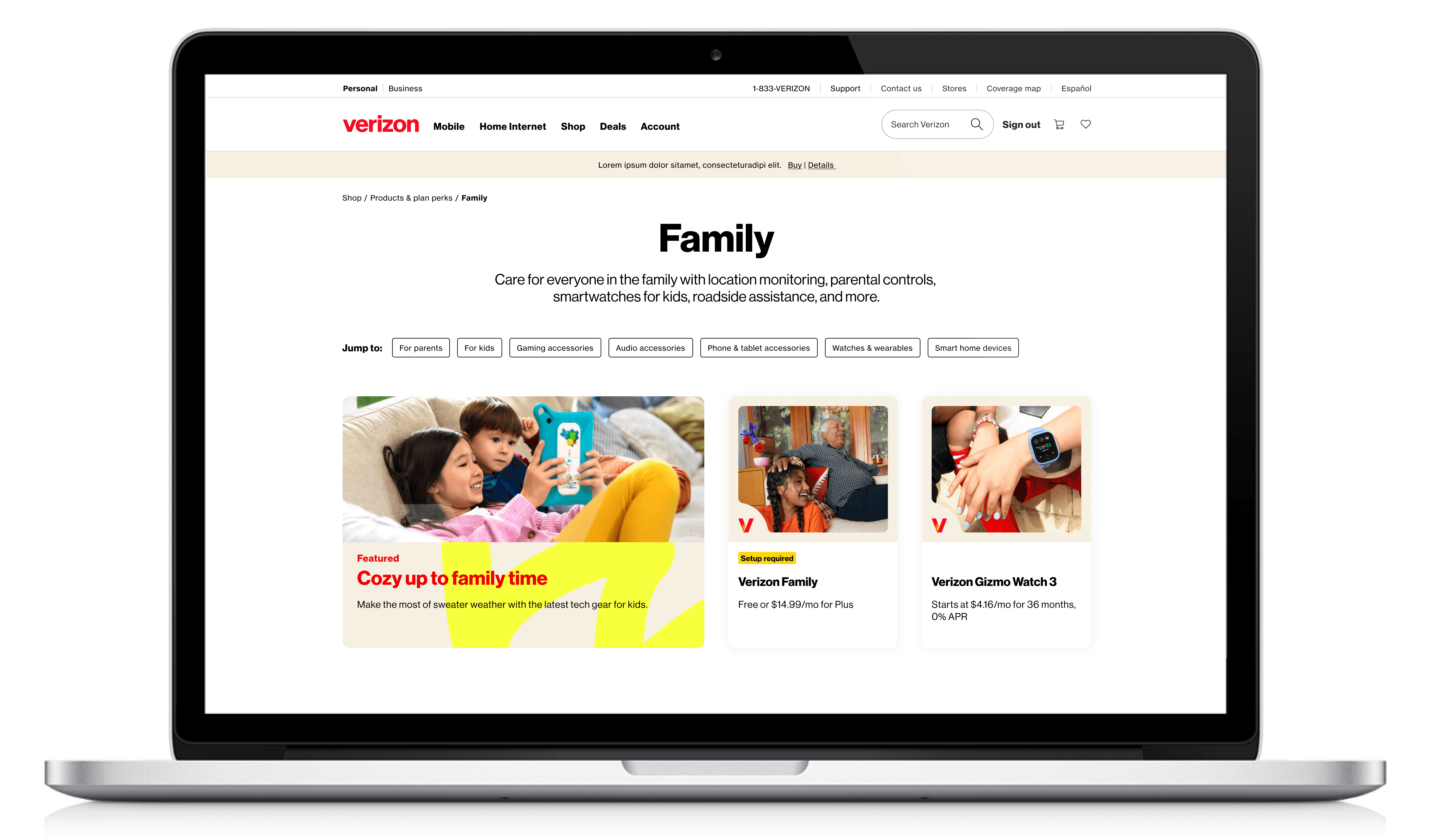
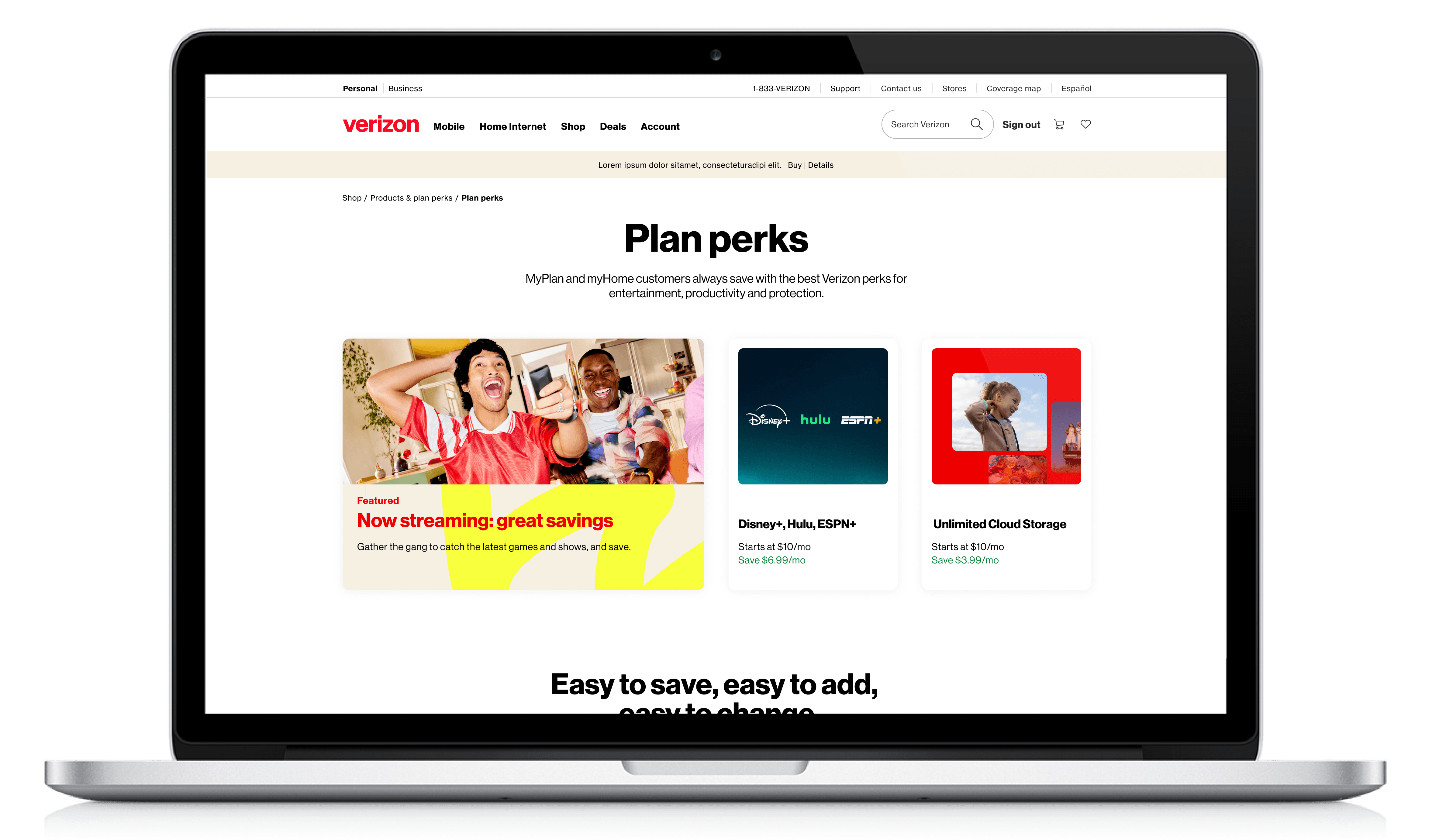
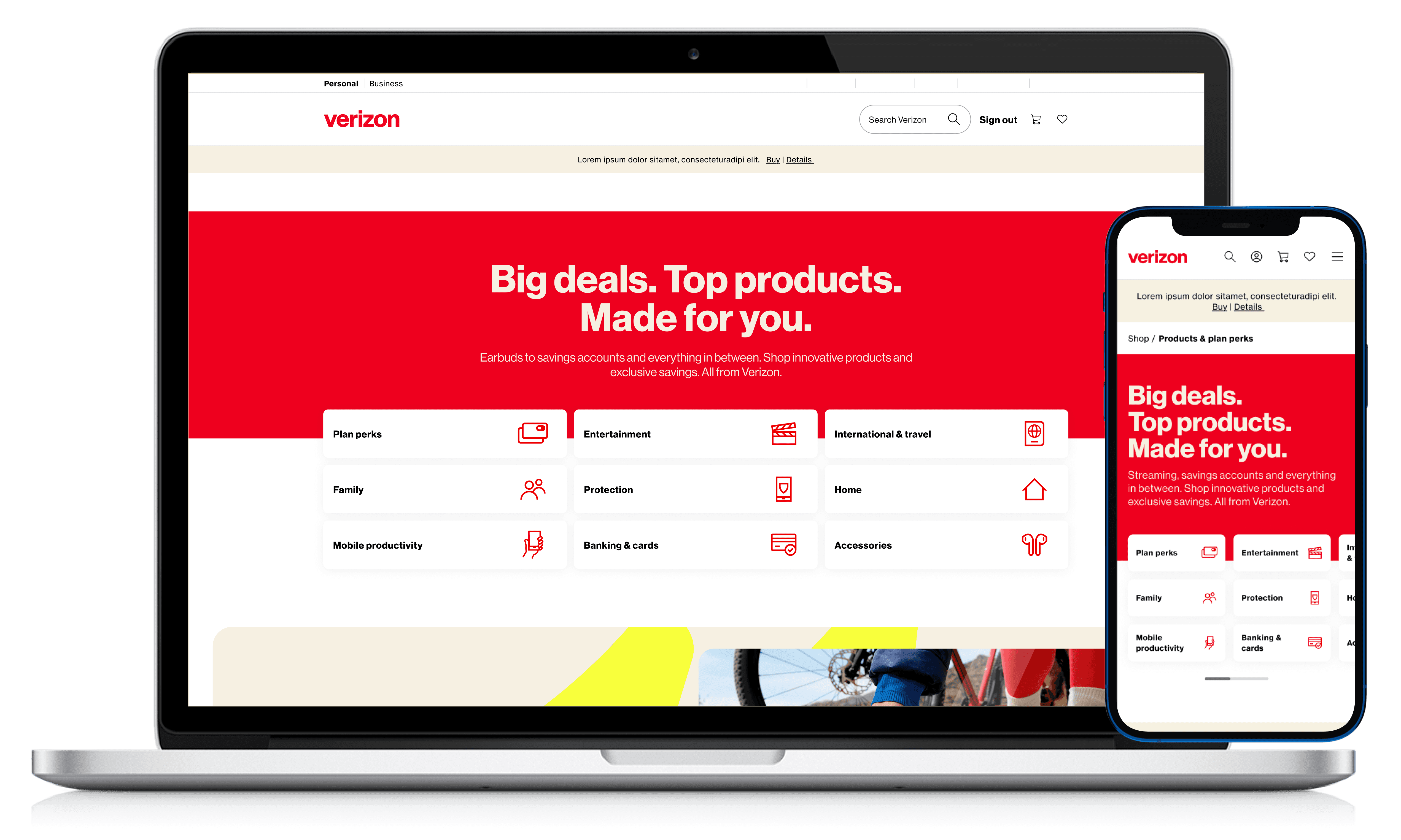
Transform the overview screen from a standalone perks page into a holistic value hub that brings together everything Verizon offers — services, perks, vouchers, and accessories — in one cohesive experience.

How We Planned It

To make this happen, we collaborated with multiple pods (services, commerce, accessories, and perks) to:


  • Reframe the information architecture so that perks and offers live at a Level 2 navigation, not hidden deep within.

  • Define a modular design system to accommodate new categories and offers in the future.

  • Ensure content parity and consistency across all offerings.

  • Prototype and test a unified navigation pattern that could scale beyond just perks.

Phase 2

Design Approach

1

Unified Information Architecture

We moved from a siloed structure → to an integrated “Offers & Benefits Hub.”Users could now see all value offerings in one place — easily accessible within two taps.

2

Collaboration & Alignment

Worked closely with content, product, and engineering teams to ensure design consistency across all pods, unifying user journeys that were previously disjointed.

3

Categorization & Filtering

Introduced smart filters allowing users to switch between categories like Perks, Accessories, Services, and Vouchers.

4

Personalization Layer

Integrated recommendation logic to surface offers based on user plan type and purchase behavior.

5

Scalable Visual Framework

Created a modular grid layout — flexible for adding future perks or categories without disrupting design flow.

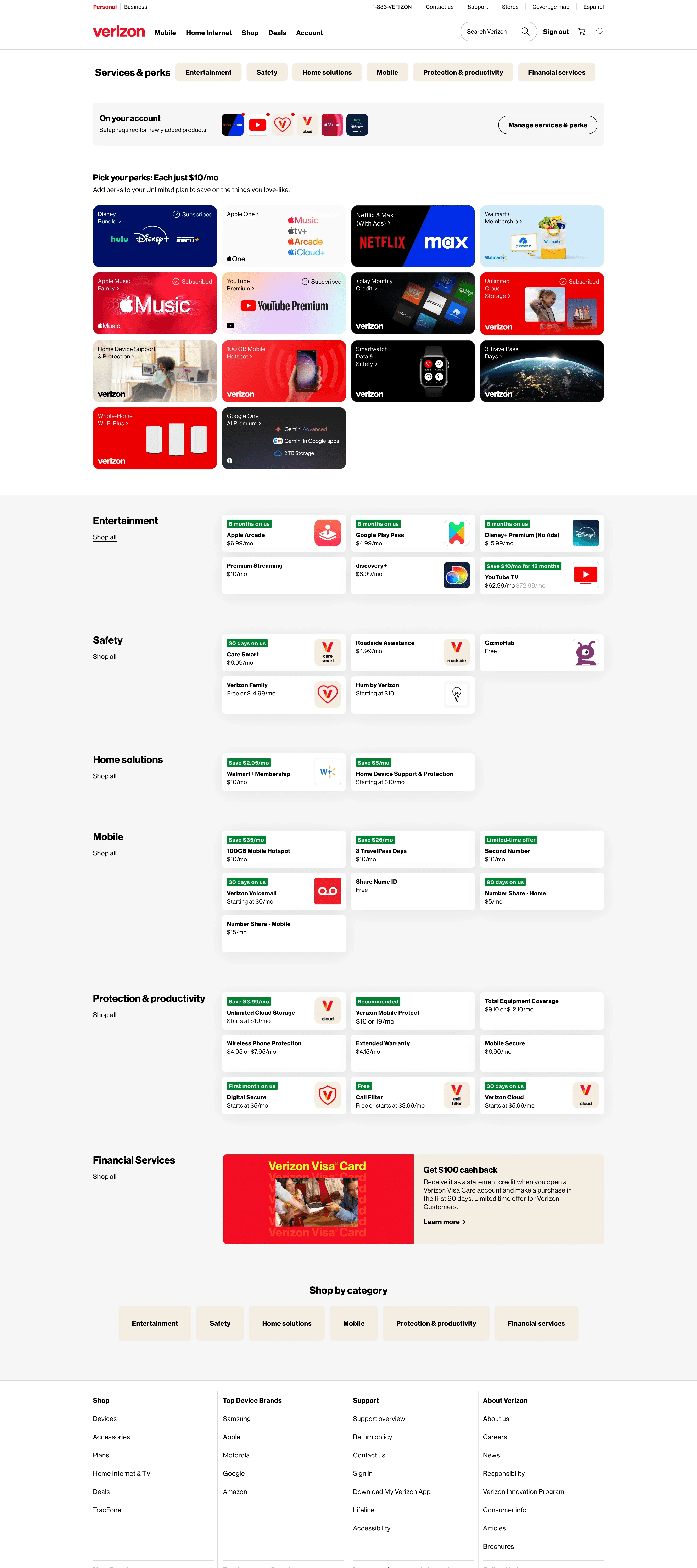
Explorations

Our first step was to declutter the interface without disrupting the underlying system.
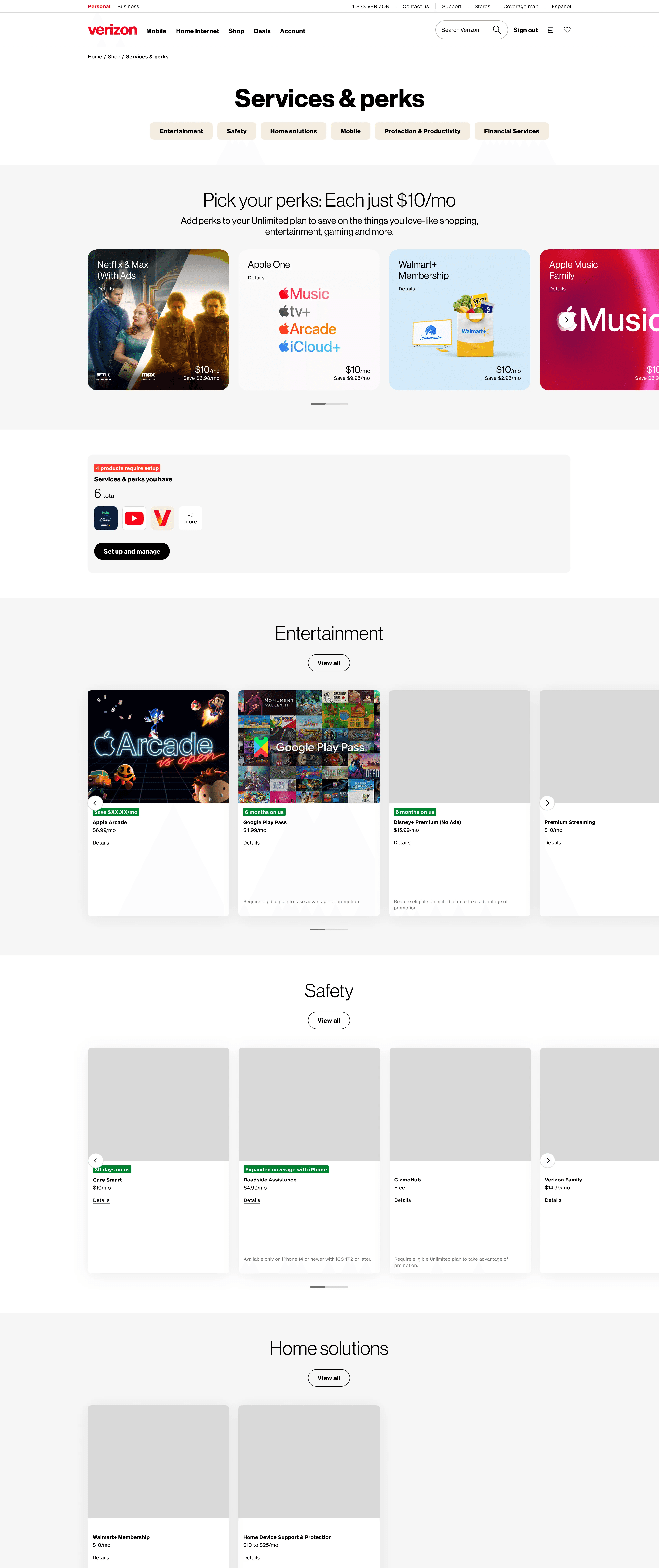
Storefront Redefinition (Experience Overhaul)

Key solutions introduced

  • Eligibility badges (Included / Trial / Add $X): Instant clarity on what users get.

  • Sticky navigation: Quick access to categories without endless scrolling.

  • Detail overlays: Extra information without forcing users to break their browsing flow.

  • Centralized hub: All value offerings in one cohesive, navigable space.

Why it mattered

This wasn’t just a facelift — it was a redefinition of how users explore value. By reducing friction and consolidating offerings, we turned perks from a hidden benefit into a driver of engagement and conversions.

Impact

To validate these findings, we conducted exploratory usability sessions. The research revealed:

42%

increase in overall offer engagement

36%

increase in cross-category exploration

40%

reduction in time-to-discover a perk

29%

lift in redemption and click-through rates

3+

Teams adopted the designs by first quarter post-launch

Outcomes & Learnings

Outcomes:

Phased strategy reduced risk and proved design impact.

Unified storefront boosted cross-category exploration and conversions.

Visual clarity (Reskin) alone improved metrics, validating our assumptions.

Design patterns we introduced were reusable across other Verizon experiences.

What I learned:

Sometimes the quickest fixes (visual decluttering) pave the way for larger transformations.

Effective UX isn’t just about aesthetics — it’s about building trust through clarity and predictability.

Cross-team collaboration (product, engineering, content) was crucial to align incentives and deliver a scalable solution.
Detailed Figma prototypes and interaction flows are available upon request.

Request Access

Unifying complexity into simplicity creates trust, and trust drives conversion.

Dribbble

Behance

Mail

LinkedIn

Designed and developed with by Pragati Sharma