Unified PDP Experience — Verizon
Unified PDP Experience — Verizon
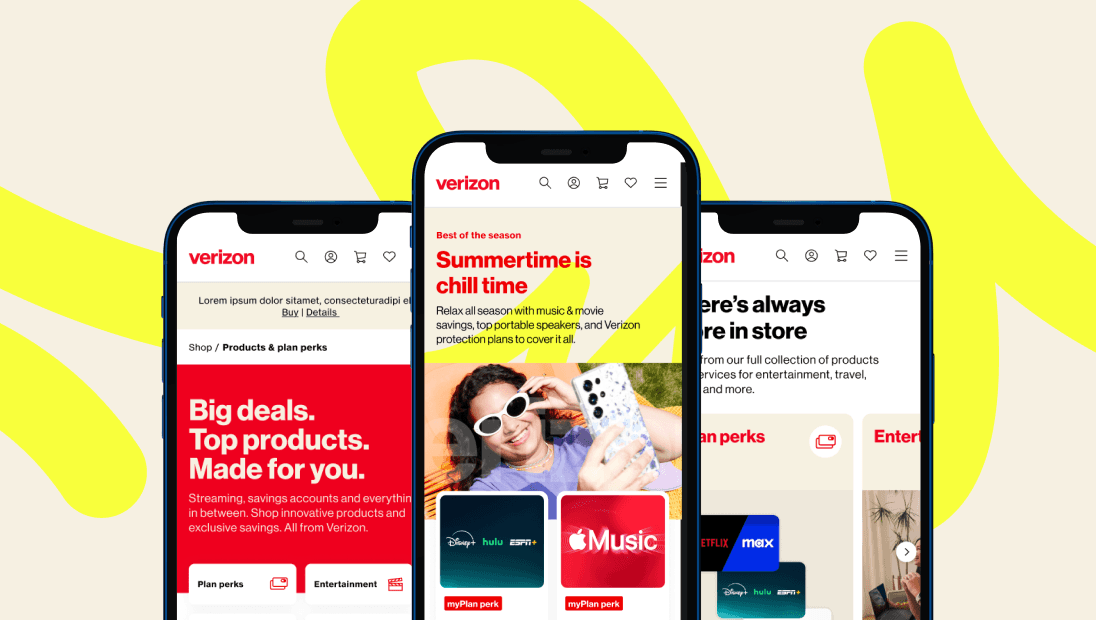
To view the case study, please open this portfolio on desktop
PROBLEM STATEMENT
Over time, Verizon’s digital ecosystem fragmented into multiple Product Detail Pages (PDPs) for the same offerings — one for legacy users, another for perk-based plans, and others for specific eligibility tiers. Each version had different layouts, pricing, and content hierarchies.
Users encountered identical products like Apple Music or Verizon Cloud across multiple PDPs with inconsistent structures. It was unclear which one applied to them. The experience was confusing, repetitive, and created unnecessary friction in the conversion funnel.
For the business, this fragmentation diluted conversions for perk-based plans — the most strategic driver for user retention.
Role
Product Designer
Time
2 months
Team
3 people
Industry
Telecom B2C
Quick Summary
⭐️Context
Verizon’s PDP architecture was built incrementally, not intentionally. Over years of updates and marketing campaigns, product teams created multiple versions of PDPs for the same services. These disconnected pages increased cognitive load, fragmented analytics, and created operational inefficiencies.
✅SOLUTION
We redefined the PDP experience as a unified system — a single, modular template that dynamically adapts to user type and eligibility. The new structure allowed all product variants (perk, non-perk, legacy) to live under one PDP, simplifying navigation and driving consistent engagement.
🎯RESULT
Post-launch, users navigated faster and made decisions with higher confidence. PDP exits dropped by ~18%, while selection of perk-based tiers increased by ~25%. Internally, content maintenance reduced by over 40%, and the unified PDP model became the design blueprint for future product categories.
Overview
The Unified PDP Experience was less about redesigning pages — and more about rebuilding trust through structure.
The challenge wasn’t visual inconsistency; it was architectural. Different teams had owned different product lines for years, creating divergent templates and redundant flows. The goal was to transform a fragmented digital shelf into a cohesive, scalable design system that could flex across multiple offerings without sacrificing clarity or brand integrity.
Design Goals
Reduce Redundancy:
Eliminate multiple PDPs for the same product.
Enable Scale:
Build a modular framework reusable across product lines.
Improve Clarity:
Make pricing, savings, and eligibility transparent and scannable.
Drive Conversion:
Encourage adoption of perk-based plans through improved visibility.
User Research
We ran a mixed-method study (remote usability tests + heuristic review) across existing PDPs. Patterns were consistent:
High Cognitive Load: Users had to read through repetitive content to compare eligibility tiers
Decision Paralysis: Many clicked into multiple tabs for the same product before realizing it was identical.
Trust Erosion: Inconsistent pricing and naming conventions created skepticism (“Why is this version cheaper?”).
Quantitative Analysis
Behavioral analytics validated the friction:
37% of users visited more than one PDP for the same product.
Average time to decision: 2.4 minutes.
Conversion drop-off: 23% between discovery and selection.
These findings framed our opportunity — simplify decisions through clarity and unification.
Explorations
We explored multiple structural approaches to unify PDPs while maintaining flexibility.
Design A: Hierarchical Listing
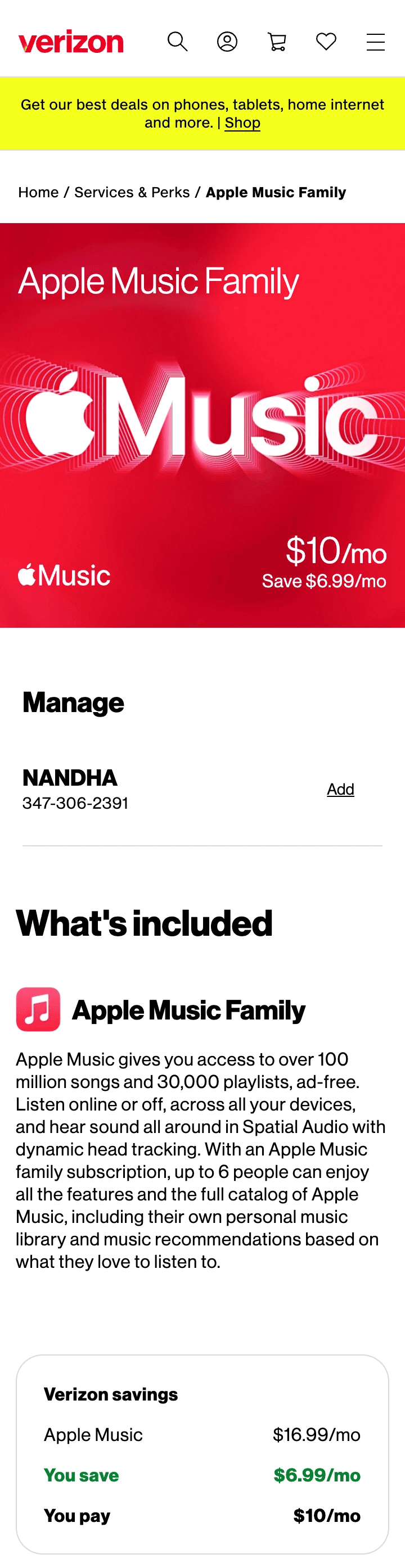
Grouped product variants vertically under collapsible sections.
✅ Improved clarity, but users missed plan distinctions when collapsed.
Design B: Visual Parity
Used color-coded tiers for perk vs non-perk.
❌ Visually heavy and perceived as cluttered.
Design B: Visual Parity
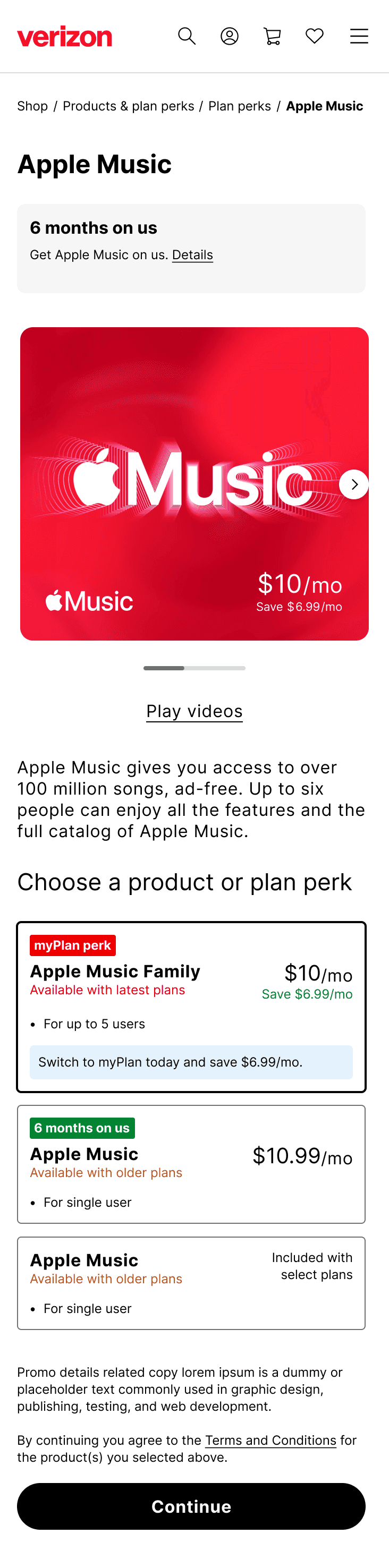
Consolidated all tiers into a single interface with toggle-based selection and live price updates.
✅ Reduced visual fatigue.
✅ Clear eligibility messaging.
✅ Faster decision time (validated in testing).
Each iteration was tested with 12–15 users through moderated sessions, ensuring that the final framework balanced clarity, performance, and scalability.
Final Design
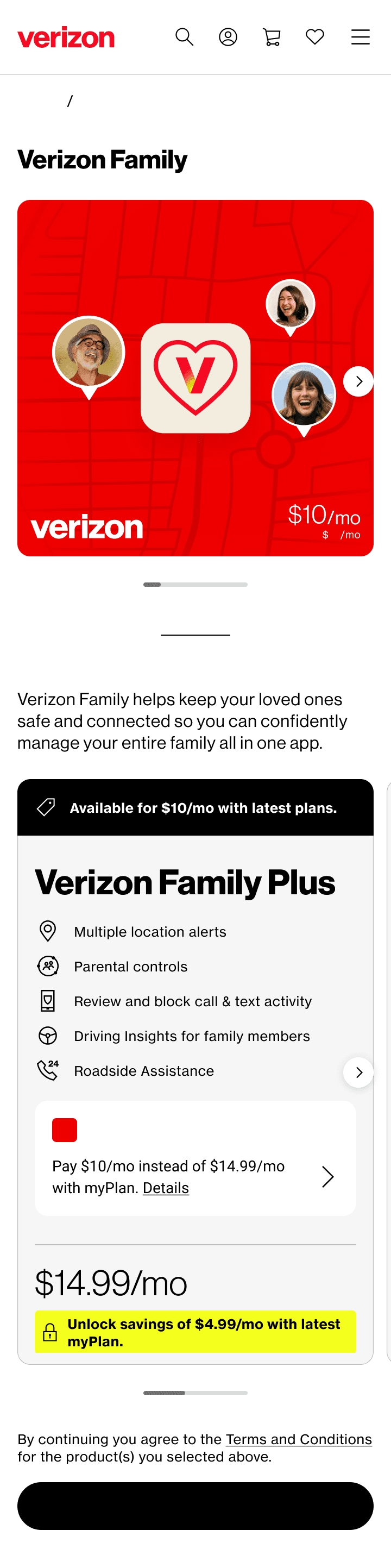
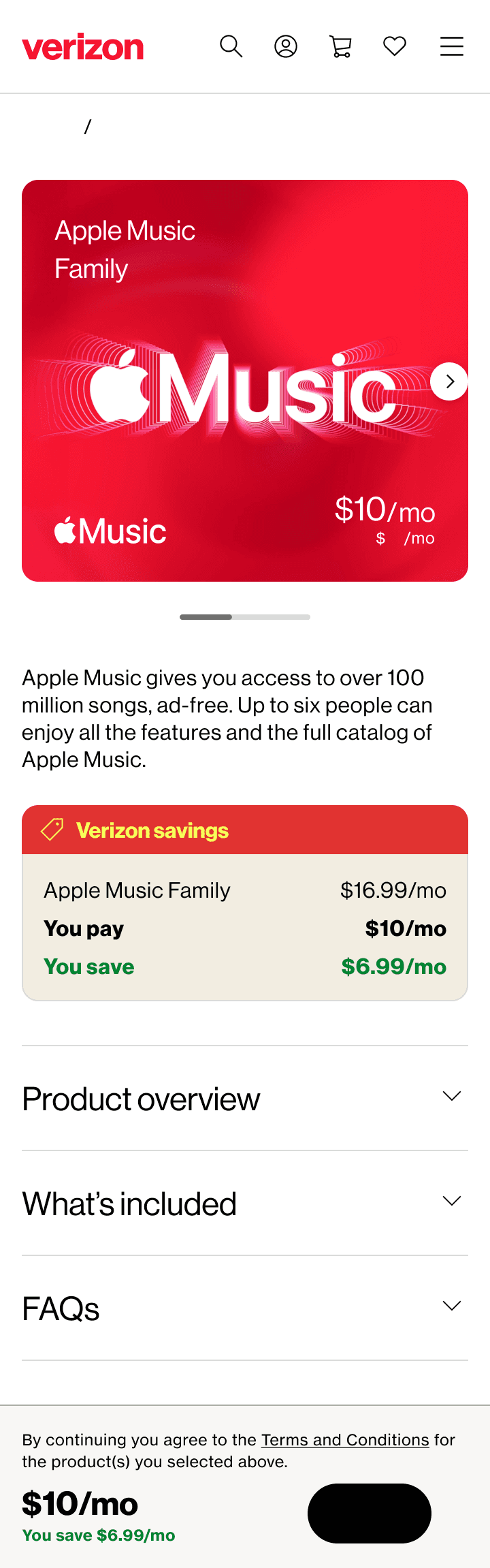
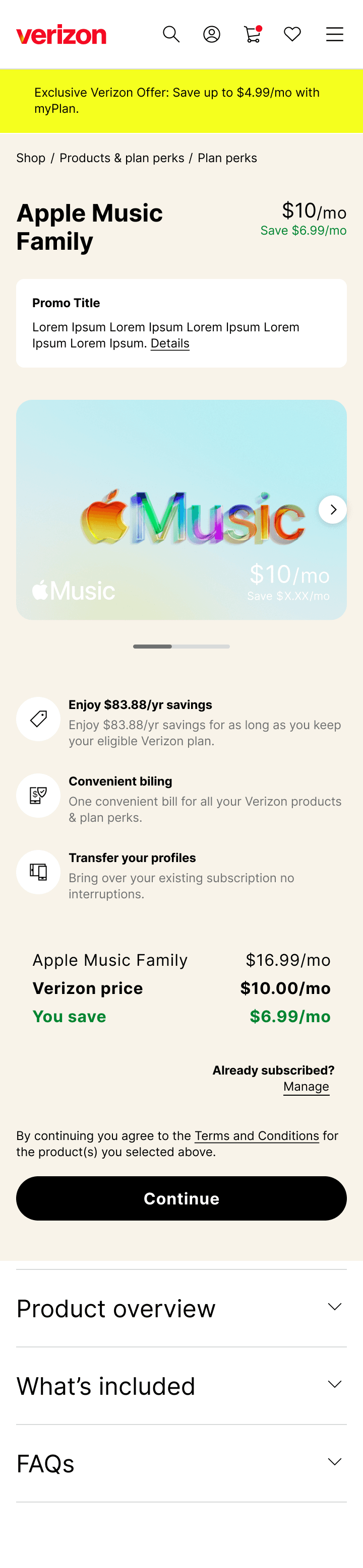
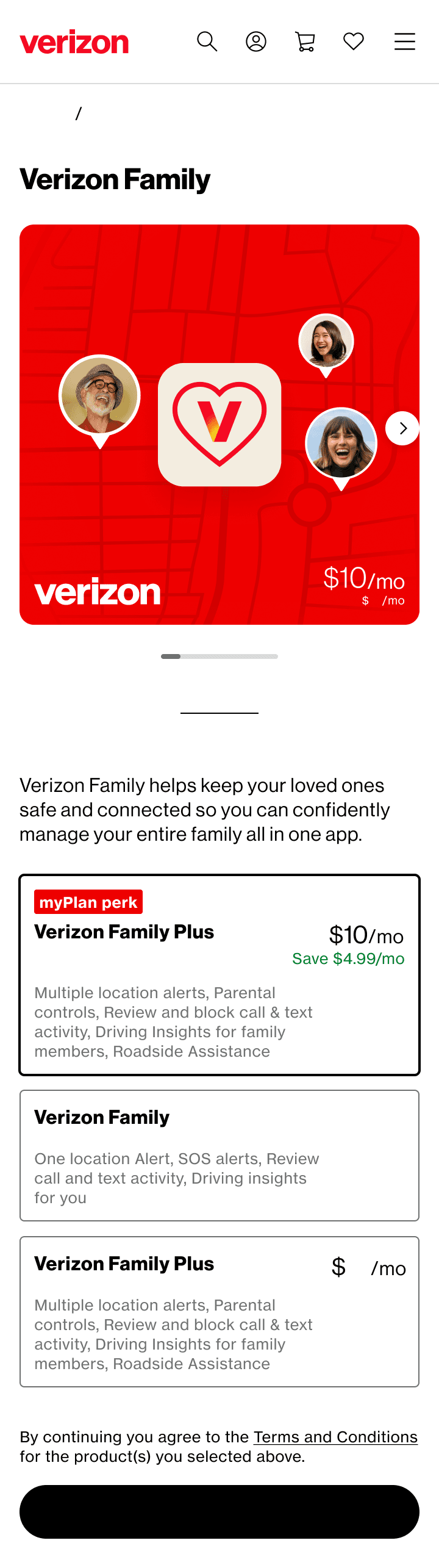
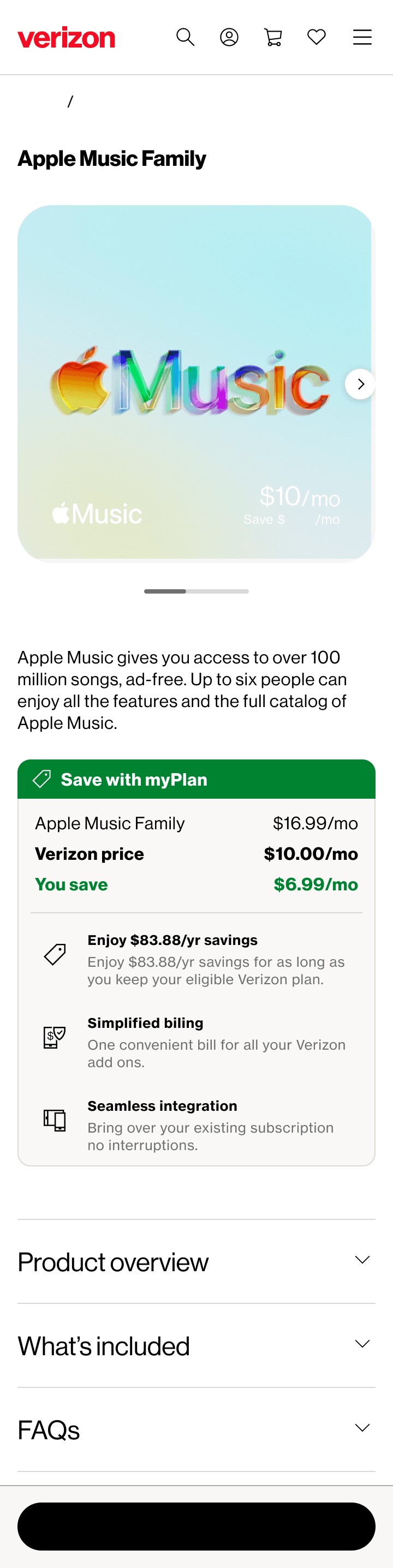
The final interface was built within Verizon’s component library, enabling reuse across product verticals. It introduced:
Reusable PDP modules (product hero, eligibility card, plan selector).
Unified iconography and typography system.
Clear focus and hover states to reinforce selection confidence.
Usability Testing
Two rounds of usability testing were conducted across 20 participants, representing different user segments (perk, non-perk, legacy). Sessions were conducted remotely with scenario-based tasks.
Key Findings:
Faster Comprehension: Decision time reduced by ~45%.
Higher Confidence: 9/10 users correctly identified their eligibility on the first attempt.
Visual Clarity: 87% described the new layout as “easier to read” or “less cluttered.”
Action Feedback: Positive responses to plan selection confirmation states (“Now I know exactly what I picked”).
Design Adjustments Post-Testing:
Consolidated savings information directly on plan cards.
Simplified color palette for higher readability.
Introduced inline success states for better micro-interaction feedback.
Impact
User Impact:
↓ 18%
PDP exits
↓ 45%
Time-to-select
↑
Clarity & trust
Business Impact:
25%↑
Perk-plan adoption
↓ 40%
Maintenance effort
3
Framework adopted
Detailed Figma prototypes and interaction flows are available upon request.
Request Access
Clarity in layout builds trust that drives action.